
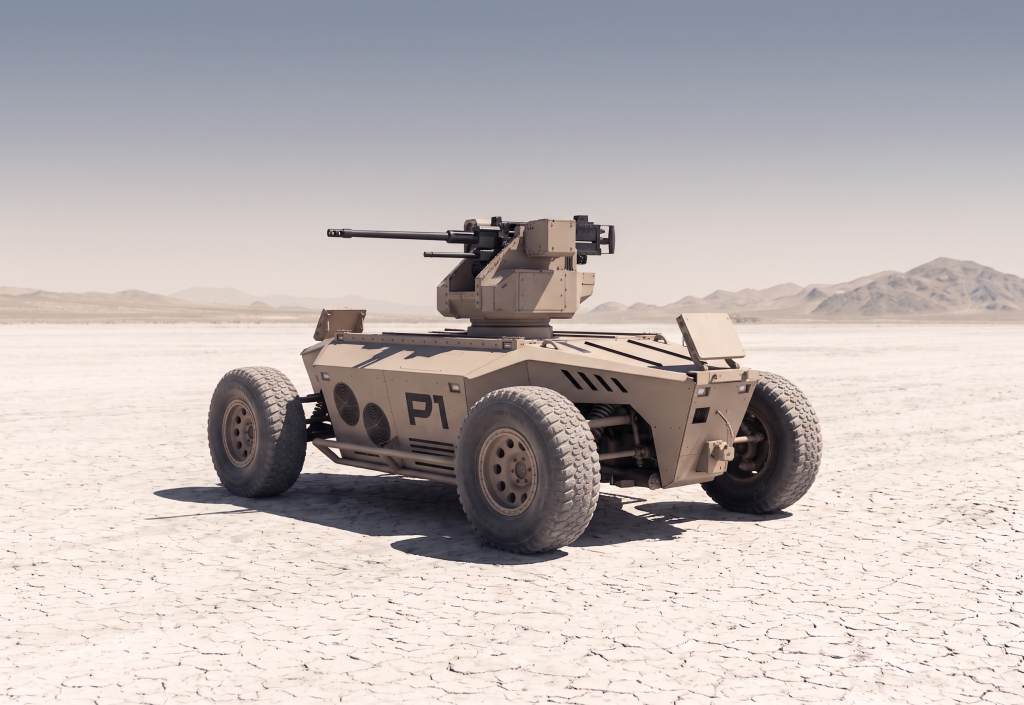
Why the Next Competitive Advantage in Autonomous Ground Vehicles Isn’t Autonomy—It’s Integration
The future of autonomous ground systems won’t be defined by a single sensor, AI model, or payload. It will be defined by how rapidly those technologies can be integrated as the battlespace evolves.
Technology Is Moving Faster Than Vehicle Development
The pace of technological innovation has fundamentally outstripped the pace of traditional defense procurement.
Artificial intelligence models continue to improve at an unprecedented rate. New sensing technologies emerge every year. Counter-UAS capabilities evolve in response to changing threats. Electronic warfare, edge computing, communications, and navigation systems are advancing continuously.
Innovation isn’t the challenge.
The challenge is that vehicle development cycles cannot keep pace.
Historically, unmanned ground vehicles (UGVs) have been designed around a fixed mission set and a defined collection of technologies. Once fielded, integrating new sensors, payloads, or mission systems often requires extensive engineering, custom interfaces, or even an entirely new platform.
As technology continues to accelerate, that approach becomes increasingly unsustainable.
The question is no longer how capable a platform is on day one.
The question is how rapidly it can evolve throughout its operational life.
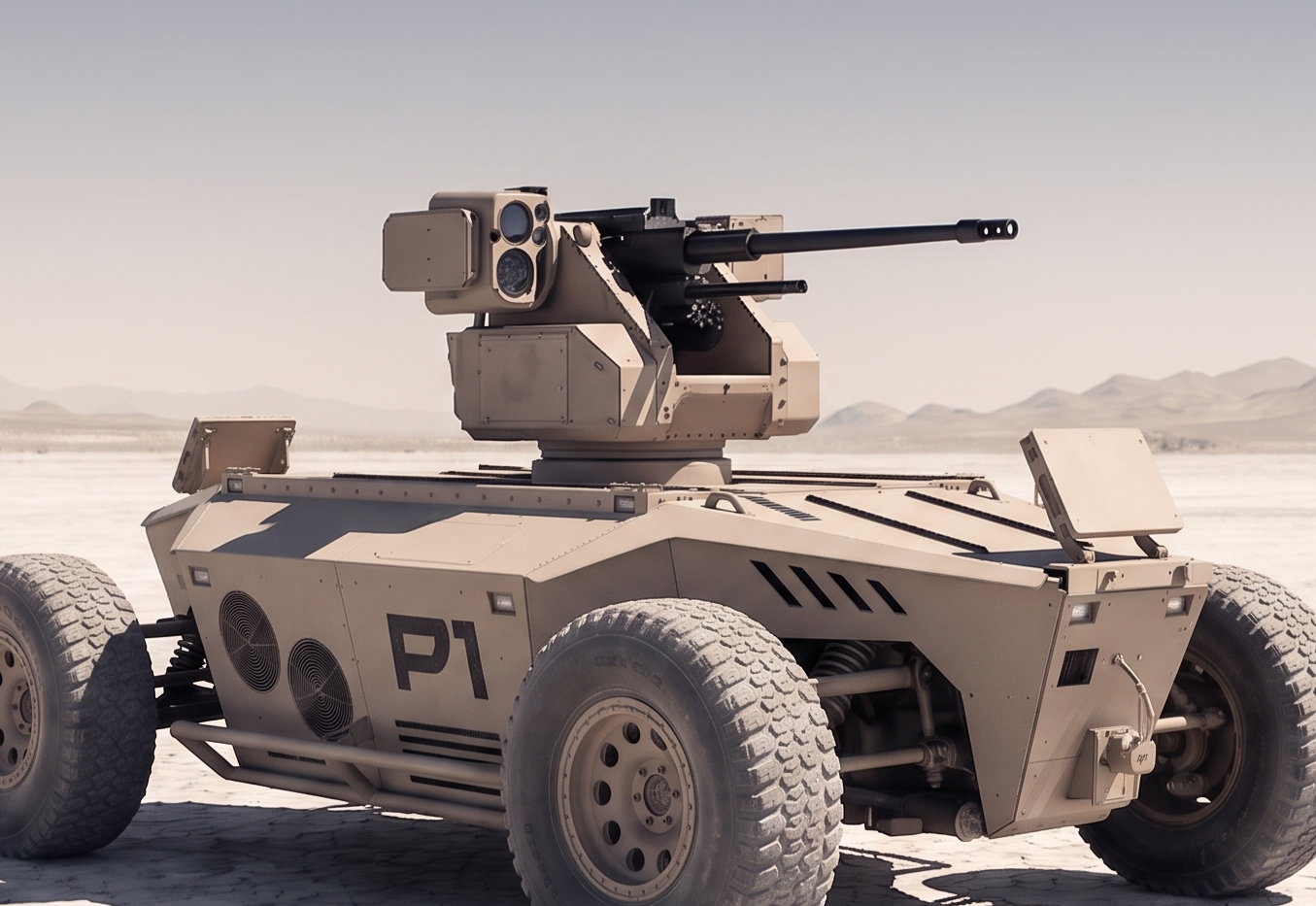
The Platform Shouldn’t Be the Limiting Factor
Every mission places different demands on an autonomous ground vehicle.
One deployment may prioritize intelligence, surveillance, and reconnaissance (ISR). Another may require electronic warfare, counter-UAS capabilities, logistics support, or remote weapon systems.
The vehicle itself shouldn’t dictate which missions are possible.
Instead, it should provide a stable foundation capable of integrating new capabilities as operational requirements evolve.
That shift fundamentally changes the role of the platform.
Rather than engineering a vehicle around a single mission profile, the platform becomes an adaptable architecture designed to support technologies that may not even exist when it enters service.
Designing Razorback Around Adaptability
This philosophy shaped Razorback from the very beginning.
Razorback is an unmanned autonomous ground vehicle platform designed for rapid integration of diverse sensors and effectors. While its baseline configurations support today’s operational roles, its open architecture enables the platform to evolve alongside changing mission requirements and emerging technologies.
Adaptability wasn’t added later—it was designed into the platform from the outset.
Razorback was architected around a Modular Open Systems Approach (MOSA), reducing the proprietary integration bottlenecks that have historically slowed defense modernization.
By leveraging standardized, open interfaces, new capabilities can be integrated with significantly less engineering effort than traditional closed architectures, accelerating technology insertion while extending the operational relevance of the platform.
Technology Insertion Is the New Measure of Readiness
One of the greatest challenges in autonomous systems isn’t predicting tomorrow’s technology.
It’s ensuring today’s platform can accommodate it.
No defense organization can accurately predict which AI models, sensor technologies, communications architectures, or mission systems will define operations five years from now.
What can be designed today is an architecture that makes adopting those technologies significantly easier.
Platforms built around proprietary interfaces often require expensive redesigns before emerging capabilities can be fielded.
Platforms designed for technology insertion reduce that friction, allowing new capabilities to be evaluated, integrated, and deployed as they mature.
In an environment where technological advantage can shift rapidly, integration speed becomes an operational advantage.
Integration Is the Real Force Multiplier
Much of the discussion surrounding autonomous systems focuses on individual technologies.
Which AI model performs best?
Which sensor delivers the highest fidelity?
Which autonomy stack offers the greatest capability?
Those are important questions.
But they overlook a more fundamental reality.
No single technology remains state-of-the-art for long.
The organizations that maintain a lasting advantage won’t simply be those fielding today’s best technology.
They’ll be the organizations capable of integrating tomorrow’s technology faster than everyone else.
In that context, integration becomes more than an engineering function.
It becomes a strategic capability.
An Architecture Built for Continuous Evolution
An open architecture only creates value if it reduces the complexity of integrating new capabilities.
Razorback’s modular platform is designed to support rapid integration across sensing, computing, communications, and mission systems, enabling the vehicle to evolve as operational requirements change.
This includes support for technologies such as:
- Electro-optical and infrared sensors
- LiDAR and radar systems
- Edge AI compute platforms
- Electronic warfare payloads
- Counter-UAS technologies
- Remote weapon systems
- Advanced communications architectures
- Navigation and positioning technologies
- Mission-specific effectors
As these technologies continue to mature, the platform remains relevant—not because the hardware never changes, but because the architecture was intentionally designed to accommodate change.
Beyond Modularity: The Software-Defined UGV™
Modularity provides the architectural foundation for interoperability.
Software-defined capability extends that philosophy even further.
A truly adaptable autonomous platform enables hardware, software, autonomy, sensing, and mission applications to evolve together throughout the platform’s operational life.
This convergence is central to Hypercraft’s vision of the Software-Defined UGV™.
Rather than defining capability by the hardware installed at delivery, a Software-Defined UGV™ continuously gains capability through software updates, modular integration, and the rapid adoption of emerging technologies.
Capability is no longer frozen at the time of procurement.
It continues to evolve alongside the mission.
Building for the Battlespace of Tomorrow
The pace of technological change is unlikely to slow.
Neither are the demands placed on autonomous systems.
Defense organizations increasingly require platforms capable of adapting to evolving threats without waiting years for the next vehicle program.
That requires more than modular hardware.
It requires an architecture intentionally designed for continuous modernization.
Razorback was engineered with that objective from the outset—not as a vehicle optimized for a single mission, but as an autonomous platform capable of integrating the sensors, effectors, computing, and intelligent systems that will define the next generation of defense operations.
The future of autonomous ground systems won’t be defined by the platforms that field the most capability on day one.
It will be defined by the platforms engineered to accept new capability throughout their operational life.
Razorback was built for that future.